REF_WEEK_02
The Week 2 workshop offered a clear and accessible introduction to basic web design and coding practices. Prior to the session, the instructional platform provided step-by-step guidance that was easy to follow, allowing me to quickly grasp fundamental concepts. Although some time was lost due to delays in accessing cPanel accounts during the lesson, the workshop remained well structured. Within a short period, we learned how to upload a website, organize files correctly, and understand the distinct functions of HTML and CSS. We were also introduced to different web design tools, and after the workshop I experimented with color adjustments to make my website feel less rigid and visually monotonous.
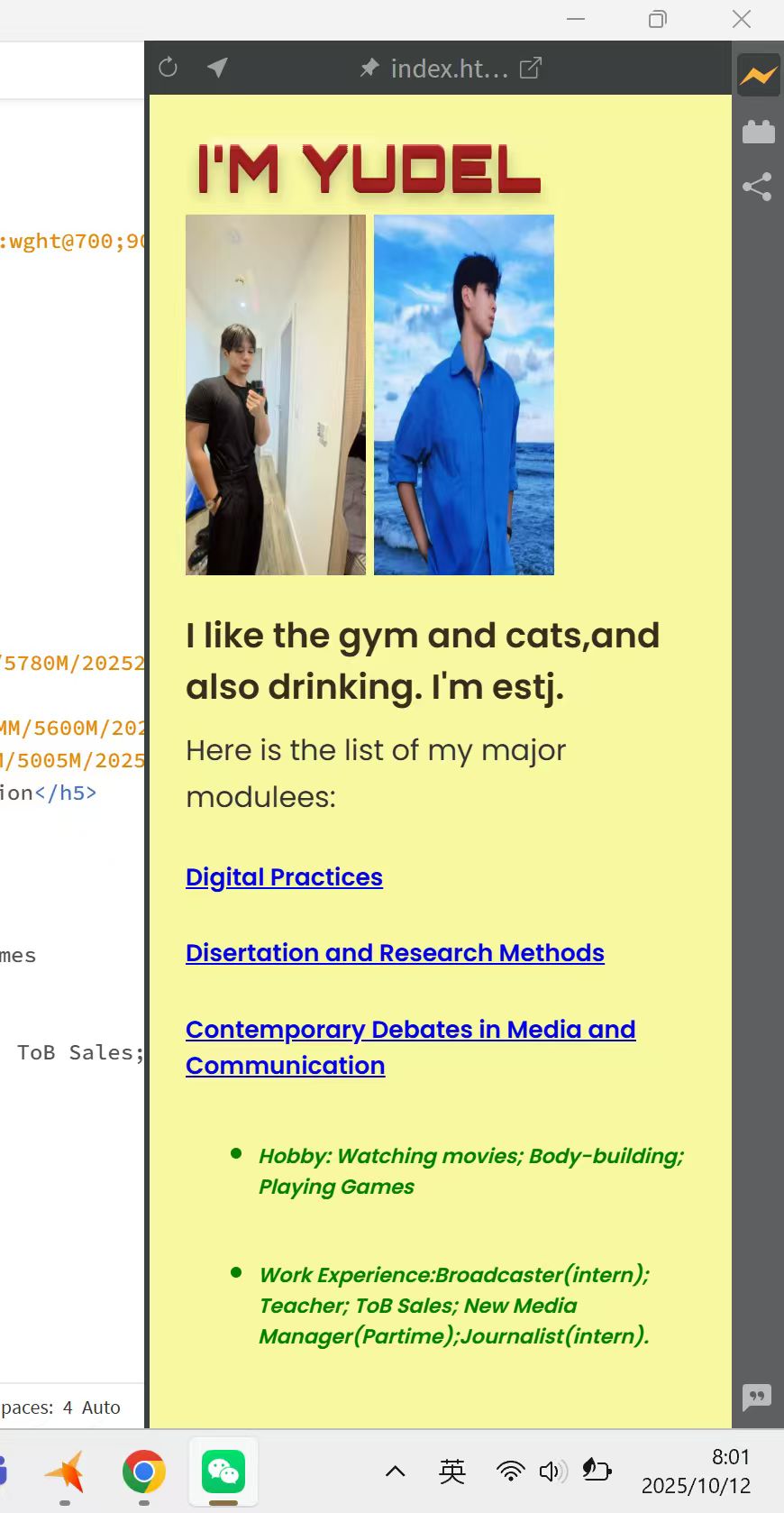 Visual Analysis: Website interface after applying custom CSS color palettes.
As a beginner in web design, this workshop marked my first direct engagement with what can be understood as a fundamental form of algorithmic thinking: a human-made procedural system governed by rules, criteria, and instructions. Writing HTML and CSS made me realize that even simple code involves processes of selection and prioritization—deciding what is displayed, in what order, and in what form. This experience closely resonates with Gillespie’s argument in The Relevance of Algorithms that algorithms do not merely reflect reality but actively evaluate and rank information based on specific value frameworks.
Gillespie argues that algorithmic systems assess relevance by drawing on commercial value, anticipated user satisfaction, and socially embedded hierarchies of importance. While building my own website, I found myself engaging in a similar evaluative process: selecting images, writing a self-description, and choosing color schemes that I believed would best represent me and attract attention. The difference, however, is that algorithmic decisions often appear objective, neutral, and automatic. Gillespie challenges this perception, emphasizing that such neutrality is largely rhetorical. Algorithms encode particular priorities and biases, which become obscured through automation and scale.
This realization prompted me to reflect on the social actors behind algorithmic systems. While coding, I imagined engineers and designers working within corporate environments, adjusting parameters and defining criteria that later govern platforms at scale. Although these individuals may hold diverse perspectives, the algorithms they produce are shaped by institutional goals and dominant socio-economic ideologies. Certain values—those aligned with corporate interests and prevailing norms—are consolidated and embedded into code, while others are excluded. In this sense, algorithms function not simply as technical tools, but as crystallizations of social power.
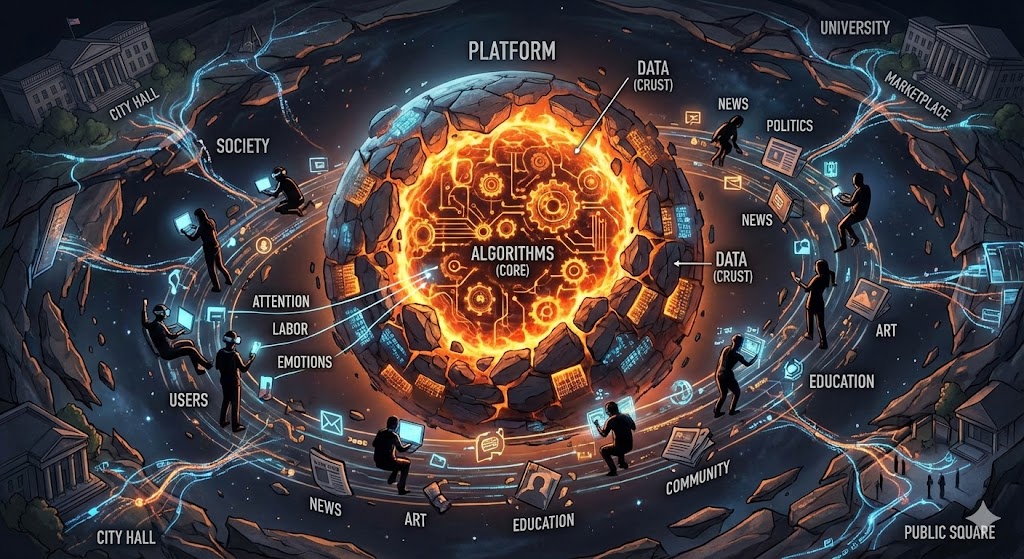
These concerns become more pronounced when considered alongside Five Theses on the Gravity of Platforms. Platforms operate as gravitational systems that pull users, data, and practices into their orbit, gradually reshaping social life through infrastructural dominance. When algorithms—framed as neutral and trustworthy—inherit social biases or prioritize commercial objectives, their influence extends quietly but pervasively. Under platform gravity, everyday practices are subtly transformed in ways that are difficult to resist or even fully perceive.
Historical examples illustrate this dynamic. Algorithmically targeted political advertising on platforms such as Facebook and Twitter has raised questions about influence over democratic processes, while Amazon’s recruitment algorithm revealed how automated systems can reproduce gender discrimination. These impacts remain difficult to measure precisely because algorithms are treated as black boxes. As Gillespie notes, political controversies are often reframed as technical glitches or data issues, obscuring questions of responsibility and accountability.
In a platform society shaped by such gravitational forces, resistance is limited. There is no equivalent counter-force capable of fully pushing back against platform power. Users are therefore caught in an ongoing tension between reliance and critique—depending on platforms for convenience and participation while remaining aware of their exploitative and exclusionary tendencies. This workshop helped me recognize that even the most basic acts of coding participate in these broader dynamics, underscoring the importance of approaching digital practices with sustained critical awareness.